


What to know about Obsessive Compulsive Disorder now
Have you wondered what truly qualifies as having Obsessive Compulsive Disorder? We hear this phrase very commonly now, and many people like to make light of their selves or routines by saying “I’m OCD,” but are they actually? It’s important to clear up any misconceptions regarding this so you can know when you actually need to seek help. Early intervention is critical for your health and to live a full life. Read on below to fully understand what having OCD means.
What is Obsessive Compulsive Disorder or OCD?
Obsessive Compulsive Disorder (OCD) is a common mental health condition characterized by repetitive, unwanted thoughts (obsessions) and excessive urges to engage in behaviors related to these thoughts (compulsions). OCD affects both children and adults and is typically diagnosed by late adolescence or early adulthood. OCD can be a very life limiting disorder, but with proper treatment a health and fulfilling life can be achieved.

What are the Symptoms of OCD?
- Obsessions: These are unwanted, disturbing thoughts, images, or urges that won’t go away, despite causing severe distress or anxiety. Individuals with OCD know these thoughts are irrational, but feel like they have no control over them. Obsessions are typically accompanied by feelings of fear, disgust, or doubt.
- Compulsions: These are repetitive behaviors or rituals intended to counteract the obsessions or make them go away. Individuals with OCD know that these behaviors are not realistic, but they feel like they must do them to relieve the anxiety caused by obsessions or prevent something bad from happening. Compulsions do not bring pleasure and provide only temporary relief. They are time consuming and get in the way of daily activities.

How is OCD Diagnosed?
Although you may hear people say that they have OCD because they occasionally experience an impulsive thought or compulsive behavior, OCD is an ongoing cycle that severely interferes with normal, daily functioning. Lightly using the phrase “I have OCD” can bring misconceptions to the significant impact and struggles of what having Obsessive Compulsive Disorder is like. There are very specific criteria that must be met in order to receive an OCD diagnosis. To be diagnosed with OCD, you must have:
- Obsessions, compulsions, or both
- An inability to control your obsessions (thoughts) and compulsions (behaviors), even when you recognize that they are irrational
- Obsessions and compulsions that last at least an hour each day and cause significant problems with work, relationships, or other parts of life
- No gain of pleasure from compulsions aside from a brief relief from anxiety caused by the obsessions

What are the Subtypes of OCD?
Though there are many types of OCD, individuals’ obsessions and compulsions tend to fall into one of the following five main subtypes.
- Contamination Obsessions & Washing/Cleaning Compulsions- Individuals with this subtype fear discomfort related to dirt & contamination and will engage in excessive washing or cleaning to relieve their stress. (e.g. Washing your hands repeatedly for hours after touching a door knob)
- Harm Obsessions & Checking Compulsions- Individuals with this subtype worry about possible harm to themselves or others and engage in constant checking rituals to relieve their distress. (e.g. Worrying about your house burning down and repeatedly driving by your house to make sure there is no fire; Worrying that you are increasing the likelihood of something bad happening just by thinking about it)
- Symmetry Obsessions & Ordering/Arranging/Counting Compulsions- This subtype involves the urge to arrange and rearrange things to prevent feelings of discomfort from things not feeling “right” or symmetrical (e.g. Wanting to write the exact same number of words in each line on a page). Sometimes these compulsions are used to prevent potential harm or danger. (e.g. “Something bad will happen if the pillows on my bed are uneven.”)
- Hoarding- Individuals who hoard are unable to discard possessions with little value due to the fear of losing items that may be needed one day. This subtype is associated with higher depression and anxiety than other subtypes.
- Obsessions Without Visible Compulsions- Individuals with this subtype will ruminate over unwanted thoughts, particularly related to sexual, religious, or aggressive themes. Instead of engaging in compulsions, mental rituals may be used, like reciting words, counting in one’s head, or praying for relief. (e.g. Intrusive thoughts about attacking someone)
How is OCD Treated?
Treatment for OCD typically involves medication, psychotherapy, or a combination of the two. Antidepressants are the most common medications used to treat OCD, and must be prescribed by a medical doctor or psychiatrist. Cognitive Behavioral Therapy (CBT) and Exposure and Response Prevention Therapy (ERP) are also highly effective in treating OCD symptoms. CBT is focused on recognizing and changing negative thoughts that cause distress and lead to compulsive behaviors. ERP involves exposing individuals with OCD to the cause of their anxiety and prevents them from engaging in compulsions.
If some of the symptoms above sound similar to your life situation, it’s important to begin taking the steps to seek help for this. Symptoms can become worse over time and sometimes will evolve into other issues if left untreated. If you’re interested in psychotherapy for OCD, reach out to us!
Source(s): National Institute for Mental Health , International OCD Foundation, Mayo Clinic, National Association for Mental Illness, The Very Well Mind
Learn More
Getting help as an adult with ADHD
Get the help that works for Adult ADHD
For adults with ADHD, or attention-deficit/hyperactivity disorder, impulsive behavior can become persistent. Some examples of impulsive behavior may be frequently interrupting conversations or saying things that you regret later, jumping from one activity to another or trying to handle three at once, and becoming impatient while driving and cutting in front of everyone. Impulsive behaviors are generally improvised or unpredicted choices that are based on emotions, rather than logic. Adulthood ADHD can lead to feelings of guilt and shame, anger toward others, and can sometimes cause harm to oneself or others. Seeking help as an adult with ADHD is incredibly important, and many simple skills incoporated into your day can be life changing!

Your impulsiveness Can be Managed
Managing impulsivity can be challenging, but it is possible. Along with seeking help from a mental health professional, here are some strategies you can try:
Become aware of your reactions
ADHD is different for everyone. What does your impulsivity look like? Try making a list of behaviors you think are impulsive. Ask others what behaviors they’ve observed. Which ones might be more harmful? Think about the times or places in which your impulses most frequently occur. Consider both the positive and negative consequences of your impulsivity.
Practice mindfulness
Mindfulness increases our self-awareness. It involves bringing your attention to the present moment and observing what is happening without judgement. Mindfulness can help you begin to recognize urges before acting impulsively, as well as distance yourself from them. Practice focusing on your thoughts, emotions, and how your body feels when you feel the urge to be impulsive.
Identify the challenges underlying your impulses and make changes accordingly
Pay attention to your inner dialogue right before you act impulsively and challenge these thoughts. For example, if you had a task to complete, but browsed social media for an hour instead, ask yourself questions like, “Did the task feel doable?” “Was it interesting?” “Did you have any resistance regarding the task?”
Make it harder to act on impulses
If you engage in impulsive spending, leave your credit/debit cards at home when you go shopping and pay with cash only. Stay away from places where you tend to spend too much money. Throw away catalogs and block emails from retailers. If you struggle with impulsive speech, carry a notebook with you and jot down thoughts when they come to mind. You can return to them later and decide if it is a more appropriate time to say them.
Pay attention to body language and social cues from others
You can learn a lot about how others receive you through their facial expressions, tone of voice, and gestures. Spend time watching before speaking.
Establish healthy habits
Exercise and spend time outdoors. Stick to a regular sleep schedule with a predictable bedtime routine. Eat smaller meals throughout the day that include protein and fiber-rich whole grains. Avoid sugar and junk food when possible.
Try calming activities
Impulsivity is often the result of feeling stressed. Some calming activities include guided imagery, listening to music, deep breathing techniques, exercise, and progressive muscle relaxation.
Plan ahead strategies
Make a list of tasks that have to be completed, decide what to prioritize, and break them down into smaller steps. Use a timer to help you stay on task. Check your calendar before saying yes to commitments.
Talk to someone you trust
Talking to someone about your struggles can provide you with a healthy outlet and a safe space to work through impulsive behaviors. Ask them to help you become aware of your impulses.
Learning to manage impulsivity takes time and practice. Though impulsivity may always be a struggle for individuals with adulthood ADHD, these strategies can help to improve daily functioning and life satisfaction. For further assistance managing impulsive behaviors consider seeing one of our therapists.
Learn More

Maintain a Healthy Body Image this Summer
Summer is a season that many love for its warm weather, long sunny days, slower pace, and relaxing vibes. However, the feelings of joy and carefreeness that summer brings are often also accompanied by feelings of anxiety, depressed mood, dread, self-criticism and shame over our body. Body image is the way we view our bodies, as well as how we perceive others to view our bodies. Summer is a trigger for anyone who struggles with body image, but it can be a challenging time for even those who are more confident about their bodies. This is partially due to an increase in body-focused headlines and advertisements during the summer season. These ads promote unrealistic and unhealthy standards for achieving the ‘perfect beach body’ that is tan, thin, and toned. Sometimes these messages come from family or friends who have their own dysmorphic ideas around healthy bodies. Because we hear these messages on repeat during the summer months, many people, regardless of age or gender, experience body dissatisfaction, which is one of the biggest risk factors for eating disorders. So how can we maintain a positive body image this summer when the negative thoughts begin to take over?

First, let’s identify some of the triggers for body dissatisfaction during the summer months:
Lack of structure– We often find ourselves with more free time during the summer, which can be nice and relaxing. However, the lack of structure can disrupt our routines, leading to an increase in emotional dysregulation and unhealthy behaviors. It is more common to skip meals or over exercise when you are not on your normal routine. More free time also gives us the opportunity to overthink how we look and get stuck in negative, spiraling thought patterns.
Greater social obligations– More free time allows for more social events and vacations with friends and family, which can increase stress. Stress can trigger negative thought patterns and unhealthy habits, especially for those who struggle with eating disorders and body image. We sometimes take stress out on our bodies.
You aren’t as covered- It’s harder to hide our bodies under lots of clothing during the hot summer months. Wearing shorts and bathing suits make many people feel vulnerable and insecure, especially when they can readily compare themselves to others around them also showing more skin.
Social media- When the weather is warm, we consistently see people in bathing suits or less clothing on our social media feeds. This is an instant invitation to start comparing and critiquing ourselves. We don’t stop to consider the fact that many of these posts are posed, edited, or filtered.
Here are some tips to help you maintain a positive body image:
Identify negative self talk- Body image is deeply ingrained in our minds from a young age, making it difficult to break free from distorted thoughts about ourselves. Try to pay attention to the comments you make about your body and how those make you feel. Challenge yourself to ban negative comments for a day or a week. Separate feeling bad from feeling unattractive. Sometimes, when we feel distressed, we allow it to take the form of negative thoughts about our bodies. This is often the beginning of anxious or depressed moods – our thoughts are within our control and we can stop this in its tracks by changing these negative thoughts.
Engage in body positive talk- Once you identify those negative statements, replace them with more realistic, positive ones. For example, turn the negative thought “Everyone will judge how I look in my swimsuit” into “People aren’t looking at me; they’re enjoying their own day.” Engaging in regular body positive talk will take time and practice. Consider writing out body positive statements and placing them around your home to serve as reminders.
Limit mirror time- Many of us repeatedly spend long periods of time in front of the mirror, focusing on the parts of ourselves that we don’t like and looking for evidence to confirm our negative thoughts about them. This only magnifies our flaws. Don’t avoid the mirror, but use it in a functional way, like to see if your clothes match. When looking in the mirror, focus on your body as a whole, instead of on the parts you don’t like.
Listen to your body- Shift your attention from the outside- how you look, to the inside- how you feel. Remember that your body is a living, breathing being that communicates with you. Practice intuitive eating and movement. Choose foods that feel good for your body without judgement and listen to the type of movement your body needs, rather than listening to what others say our bodies should be doing.
Practice self-compassion- Would you speak about a friend’s body the way you speak of yours? Be kind toward yourself. Engaging in self-care is a great practical way to do so. Working on self-acceptance and seeing ourselves on a journey through life, rather than as our anxious or depressed thoughts about one snapshot in time is very helpful.
Express gratitude toward your body- Focus on what your body can do, rather than how it looks. When we get caught up in what’s ‘wrong’ with our bodies, we take what they do for us on a daily basis for granted. Practice writing down things you are grateful to your body for in a journal and really feeling the appreciation.
Limit social media- As we mentioned earlier, social media is a trigger for body dissatisfaction. If you find that scrolling through social media tends to leave you with negative thoughts about yourself, set limits on your usage and take breaks.
Sometimes the societal messages we receive about body image, combined with our negative thoughts about ourselves can be too much, leading to body dysmorphic disorder or eating disorders. Eating disorders are more common than you might expect. Around 8 million people in the United States struggle with an eating disorder. The good news is that up to 80% of people who seek proper treatment will see significant improvement. Our therapist, Kathleen Fetter, LCMHC-S, specializes in the treatment of eating disorders. If you are struggling with body image issues and would like more individualized help, contact us or call us at 704-664-1009 to schedule with Kathleen! At Miracles, we want you to know that you have a beautiful body that was designed to carry you through life!
Learn More
How to help your student overcome test anxiety
For most students, the end of the school year is exciting because it means that the freedom of summer break is right around the corner. However, before students can begin to enjoy summer break, they must get past the one thing that many dread the most… testing! For our 3rd-12th grade students, it’s the end-of-grade tests and state exams. For our college students, it’s finals. With the end of the school year fast approaching, many of these students are likely already experiencing test anxiety. This is a term we hear a lot, but what exactly is test anxiety? What causes it? And how can we overcome test anxiety? Read below to learn how to help your student overcome test anxiety.
Test anxiety is a type of performance anxiety that we experience when pressure from high expectations or the fear of failure interfere with our ability to perform well when taking tests. Having some nervous feelings before a test is normal. In fact, these feelings are helpful because they keep our minds alert and focused. However, too much test anxiety can have the opposite effect, making it difficult to recall information or think clearly. Serious test anxiety can also lead to physical symptoms, such as, increased heart rate, shortness of breath, sweating, dry mouth, sweaty palms, headaches, upset stomach, nausea & vomiting, shaking, fainting, or even panic attacks. In addition to physical symptoms, those with test anxiety may experience emotional symptoms, like low self-esteem, frustration, irritability, fear, or helplessness. If this sounds like you or your child, then how can you begin to manage your test anxiety?

Here are some test taking tips to help you during this exam season:
- Prepare Well- Feeling prepared for a test ahead of time can help reduce your anxiety on test day, while cramming only increases it. Consider joining a study group or finding a tutor if the material is challenging. Also, be sure to learn all you can about the format of the test beforehand, such as how many or what types of questions will be on it.
- Be Mindful of Self-Talk – Watch out for unrealistic or negative thoughts. It can be easy to go down this road, but try to think about what you are telling yourself, how rational it is, and if there’s something better you could say. For example, if you find yourself saying “I have to do well on this exam,” challenge that thought with “Even if I don’t do well, it’s not the end of the world.” Or, if you say “I’m gonna fail this exam,” remind yourself of all the times you’ve successfully taken exams in the past.
- Visualize Success- Picture yourself on exam day feeling confident and doing well on the exam. If you visualize successful completion of the test, it can help you make it happen in real life!
- Use Relaxation Techniques– While studying for your test, practice deep breathing exercises, progressive muscle relaxation, or mindfulness meditation and be sure to take breaks! Some of these strategies can also be used during the test when you start to feel overwhelmed!
- Stay Healthy- Students often neglect their physical health when preparing for exams, which can worsen test anxiety. Be sure to get adequate sleep, eat nutrient-rich foods, regulate caffeine intake, and make time for physical movement during the time leading up to the test. On test day, remember to eat an adequate meal and avoid excess caffeine.
- Have Grace for Yourself- Remember that a little bit of anxiety before a test is healthy, so don’t be upset with yourself for this! Accept this feeling and realize that it helps you stay motivated. Try to let go of perfectionism. Remember that it is impossible to know everything! When studying, focus on the major concepts first and then return to the less important information if you have time.
- Reward Yourself- Plan something to look forward to after the test to celebrate your completion. This does not have to be big, and elaborate! Just make sure to take some time to relax and debrief afterward. You worked so hard! Be proud of yourself! If you have multiple exams, try to allow at least a small break before studying for the next one.
If you would like more personalized help with ongoing test anxiety for you or your child, our therapists would be happy to help you develop and implement specific test taking strategies in your life. Contact us here.
Learn More
Coping better with Pandemic Anxiety
 In addition to an increase in the prevalence of depression, as discussed in our previous blog post, mental health professionals have also seen an increase in the prevalence of anxiety since the outbreak of the COVID-19 pandemic. Many Americans have reported that their anxiety symptoms have been significantly worse over the last year. With change on the horizon due to recent vaccine rollouts and lifted restrictions, you may find that your anxious feelings continue, or even worsen. As the future of the pandemic remains uncertain, it is normal to experience some anxiety. This is our bodies’ natural response to stress. However, sometimes we let our anxious thoughts take over, interfering with our day-to-day functioning and well-being. So, how does COVID-19 affect anxiety? And how can you manage your anxiety about COVID-19 when it seems like you’ve lost all control?
COVID-19 and Anxiety
Many of the effects of COVID-19 that we have seen and experienced are also triggers for anxiety. During the past 18 months we have been exposed to compounding stressors that have created a continuous anxious response in many of us. We have all experienced at least one if not more of the primary triggers below:
Negative Life Events: The stress that we experience from situations such as, financial instability, job loss, sickness, death of a loved one, or trauma, can be overbearing and leave us feeling hopeless. These types of events are all triggers for anxiety. As if a global pandemic isn’t triggering enough, many of us have also experienced several of these other anxiety-producing situations at the same time.
Feeling a Loss of Control: We like to have a firm hold on the reins of our lives. It gives us a sense of stability and makes us feel safe. When we experience significant life stressors like the ones mentioned above, our feelings of security are replaced with feelings of uneasiness or restlessness. Our thoughts start to spiral toward all the “what ifs” and we feel like we’ve lost complete control over our lives. This is especially true in relation to the lack of control we feel with regard to progression of the pandemic and the restrictions that remain or are no longer in place.
Self-care is Harder to Maintain: When we feel so overwhelmed by the stress of difficult situations, it is hard to make time for self-care. This is because we give so much of our energy and thought to these stressors that we’re too tired to engage in healthy practices. Unfortunately, these are the times when we need it the most, as self-care activities often alleviate our anxious feelings.
Loneliness: Most of us have probably experienced loneliness at some point during the pandemic due to social distancing. Spending time with others tends to be a protective factor against anxiety. When we aren’t able to get the social contact we need to take our minds off stressful situations, it’s easier to allow our anxious feelings to take over.
Getting COVID-19: This one may be the most obvious trigger for anxiety during the pandemic. The ongoing fear of ourselves or a loved one testing positive for COVID-19 can lead to the onset or worsening of anxiety symptoms. Fortunately, for many, receiving the vaccine has relieved their anxious feelings. However, the vaccine has also been an additional source of anxiety for those who are apprehensive about taking it.
How Can You Cope with Anxiety as the Pandemic Improves?
Focus on the Things You Can Control: Do you feel anxious that some people and states are moving too fast to get back to normal life as the pandemic improves? On the other hand, maybe you feel like things aren’t moving fast enough and this makes you anxious. Instead of getting caught up in the aspects of the pandemic you can’t control, such as the actions of others, focus your energy and attention on what you can control and doing what’s best for you, like establishing a daily routine, getting enough sleep, eating healthy, or engaging in self-care.
Challenge Your Thoughts: We are in challenging times right now with our thoughts – the rules of what has been considered “safe” have begun to change. As this continues to happen, we will need to reassess our assumptions, beliefs, and patterns, to ensure we aren’t allowing anxiety to dominate our choices. It can be easy to allow our negative thoughts to take over when so much is changing around us. It’s still important that we learn to recognize common thought distortions, such as polarized thinking, filtering, overgeneralizations, jumping to conclusions, catastrophizing, ‘should’ statements, or emotional reasoning. When you recognize a distorted thought, stop and ask yourself, “Is this accurate?” Think about how you would respond if a friend spoke to themself that way. Consider other possible outcomes.
Practice Self-Compassion: Maybe you’ve adjusted to pandemic life and you don’t feel ready or eager to go back to the way things were as restrictions are being lifted. Are you ashamed to not be excited about reentering a world that still doesn’t feel safe to you? Maybe you’re so eager for things to go back to normal that you’re trying to do too much at once and you feel overwhelmed. Do you feel guilty because it’s now harder to juggle all of the things that you did pre-pandemic? Have some grace for yourself because times are different! Focus on doing a few of the things that make you feel more like yourself! Take time for you and go at your own pace.
Limit News Consumption: It can be tempting to keep a close watch on the news for pandemic updates, but frequent consumption can worsen anxiety by reminding us of all the things we can’t control or leaving us frustrated that pandemic restrictions are not moving at our ideal pace. Be sure to give yourself some space from the news, especially around bedtime.
Practice Gratitude and Mindfulness: Reminding yourself of things you are grateful for on a regular basis can be a great way to relieve some of your anxious feelings. Perhaps you’re feeling grateful for receiving the COVID-19 vaccine or being able to see loved ones you haven’t seen in a while. Consider keeping a gratitude journal. Mindfulness is another great way to cope with anxiety. It teaches us how to respond to our stress with awareness of what is happening in the present moment.
See a Therapist: Don’t be afraid to seek help! Your anxious feelings are valid and you are not alone in your pandemic-related anxiety. Our team of licensed therapists are familiar with the ways in which the changes surrounding COVID-19 can bring about or worsen anxiety. We are here to help you develop coping skills and show you how to use your inner strengths to manage your anxiety. We are still offering both virtual and in-person appointments in case you are anxious about meeting in-person or navigating telehealth!
Learn More
Coping with Pandemic Depression
Without a doubt, we have seen an increase in the prevalence of depression since the outbreak of the COVID-19 pandemic. Some studies suggest that the rate of depression in the United States has tripled. With no definite end to the pandemic in sight, it is understandable that many Americans are experiencing feelings of hopelessness. So, what is the connection between COVID-19 and depression? How has depression been brought on by the pandemic? And how can you cope with these feelings, even as COVID-19 continues to affect us?
How has COVID-19 impacted our Depression Levels?
We have been facing extended periods of isolation: We are social creatures with a desire for human interaction! Not being able to spend time with friends or family members can leave us feeling isolated and lonely. These feelings can trigger depression.
Anxiety and Uncertainty is a daily experience: With so much uncertainty surrounding COVID-19, worry is a natural response. However, when we allow our worries to spiral, they can turn into anxiety. Anxiety can lead to depression when we feel like we’ve lost control of our thoughts, leaving us helpless.
Change in routine creates stress: When we experience major life changes, such as job loss, death of a loved one, financial difficulty, cancellation of big events, or even a shift in environment, we become stressed. Experiencing several of these major stressors at once can feel overwhelming, leaving us more susceptible to depression.
Unhealthy habits form in survival struggles: The ways in which we respond to major stressors can worsen depression. Some unhealthy strategies include substance abuse, overeating, self-medicating, and lack of sleep or physical activity.
The experience of being COVID-19 Positive: Having COVID-19 sometimes leads to feelings of guilt, shame, failure, or disappointment. The stigma of contracting the virus is isolating, as it can lead to self-blame and negative-self talk. These feelings and reactions can turn into depression. For those who experience a longer recovery period, or prolonged symptoms, such as loss of taste or smell, ongoing feelings of sadness or hopelessness are more likely to occur.
How Can You Cope as the Pandemic Continues On?
Maintain a routine & establish healthy daily habits: It can be hard to stay on a schedule after spending so much time at home for so long. Try to find some purpose in each day and create structure for yourself. This will help stabilize your depression by keeping your internal clock running smoothly. Avoid sleeping too much or too little and skipping meals or exercise. Regular exercise can be as effective as antidepressant medications and foods with omega-3 fatty acids can boost your mood! Keep up with your personal care routine, just as you would have before the pandemic, by showering and getting dressed each day.
Make time for things that bring you joy: Keep engaging in activities that enhance your mood daily, such as spending time with pets or outside, reading, cooking, crafting, or listening to music. These are your personal coping skills!
Practice mindfulness and relaxation techniques: Mindfulness will help you acknowledge your ongoing, pandemic-related feelings without judgement and respond to them with positive self-talk. Other relaxation techniques that will help you break away from your negative thoughts and relieve tension or anxiety include meditation, progressive muscle relaxation, and breathing exercises.
Stay connected with others: Over the past year, we have had to adapt and find new ways to engage with one another. It is important to stay in contact with those close to you in a manner that feels comfortable and safe, even when those depressive symptoms make it seem easier to stay isolated.
Limit news consumption: While it is important to stay informed about progressions with the pandemic, overconsuming news may be contributing to your feelings of sadness, hopelessness, or exhaustion, which will worsen your depression. Especially avoid news updates around bedtime.
Practice gratitude: As the pandemic continues to bring about feelings of hopelessness, try to find at least one thing you are grateful for each day, such as a beautiful sunset or a text from a friend. Consider writing these things down in a gratitude journal. Practicing gratitude may seem small, but it can provide relief from depressive symptoms and negative thoughts.
Help others or volunteer: Taking our minds off ourselves and our depression by offering to help others is a great way to decrease stress levels and increase feelings of happiness! The weight of our own issues becomes less heavy and we feel good inside.
See a therapist: There is no shame in seeking help! We have a wonderful team of licensed therapists who understand the impact of COVID-19 on depression and are here to help you develop coping skills and use your inner strengths to manage it. We are still offering both virtual and in-person appointments to meet your level of comfort with the pandemic.
Learn More
The obstacles to changing your life to know
Overcoming the Obstacles to Change
We are excited to share this latest article written by Sarah Groff, LCMHC on the obstacles to change, and the elements of life that can help you truly initiate a new beginning for you. Sarah has been a team member of Miracles Counseling Centers for the past 3 years and is highly skilled in counseling addressing relational attachment needs of families and couples, and also works with late adolescents through adulthood on issues relating to trauma, depression and anxiety concerns, and empowering clients to live fully in an intentional life.
I think it goes without saying that most people seek out therapy in hopes of accomplishing some level of change in their lives. Whether it’s navigating a serious mental health issue, a life transition, or a relationship or career stressor, therapy is often the avenue for identifying effective steps for change. Why then, can it be so difficult to enact and maintain?
Understanding the ways in which change actually takes root and becomes sustainable over the long term is just as important as learning to love oneself and develop healthy coping mechanisms. One of the most common themes I see in dealing with clients is the desire for movement in a particular area combined with an overwhelming feeling that such movement (or transformation) will remain forever elusive. While I would normalize these conflicting emotions, I would also argue that change does not have to feel like a never-ending game of cat-and-mouse. This article will briefly identify some common reasons why we tend to resist change, as well as steps to take in achieving it.
To begin with, a resistance to change is often a reflection of one’s lack of confidence, life experience, modeling, or fear of failure based upon past attempts. When I begin to probe into a client’s past efforts at change, it is not uncommon to discover that he or she either lacks practice or has been “shot down” so many times throughout their life that they no longer believe they are capable of change. All too often, society assumes that people who so “obviously” need to change and don’t, are just lazy. I realize that may be true in some cases, but more often than not, I believe clients lack skill, confidence, experience, and an advocate. Not only can a therapist help to identify the root of a client’s resistance, but they can also be a positive voice to encourage a client that he or she truly is capable of effecting the change(s) they so need and desire.
Another important factor to keep in mind is that we often mistake change for a television makeover. In other words, we expect it to be quick, tidy, glamorous, and relatively painless. If that is your expectation, then I venture to say you may be disappointed. By its very nature, change is undoing something that was and transforming it into something new, therefore some level of discomfort is to be expected. I believe this is a second reason why change sometimes doesn’t take root, despite the best of intentions. If clients can get past the resistance stage, they may become discouraged when the work becomes hard. For example, clients may feel at a loss when experiencing emotions for the first time or when their faulty patterns of thinking and behaving are being challenged. Without even knowing it, a client may sabotage their own therapeutic process because they misunderstand discomfort for failure. When I see this occurring, I remind my clients that if they will believe in the process and develop some tolerance for the discomfort that positive change creates, then their emotional/mental “muscle” will be strengthened and will continue to grow with each step or improvement made.
The pace and timing of change are equally important to acknowledge in this discussion. When it comes to changing one’s thoughts and behaviors, not only is it work that takes time, but it also requires attention to pace. In other words, it can’t be too fast or too slow. If change moves too quickly, the roots are shallow and if it moves too slowly, clients often lose motivation. You can liken this process to baking cookies. If you don’t include enough baking soda, for instance, then the cookies fall flat. By contrast, if you add too much then the whole batch tastes sour. Skip a step, eliminate an ingredient, or alter the time and temperature, and the result will probably be disappointing. When it comes to one’s mental and emotional health, the same principle applies. Remember, the goal is genuine change that lasts, so paying attention to pace and timing are critical.
One of the most helpful tools in creating much wanted/needed change is to identify small steps to support that goal and then tackle one step at a time. Clients often admit to feeling overwhelmed about all of the changes they believe are necessary, but when you break it down to one area of focus at a time it is much more manageable (and sustainable). For some individuals, the first step towards a healthier, more balanced life may be to engage in some form of self-care or to go on a social media “diet.” For others, it may be setting their alarm to get up 20 minutes earlier every day so that they can practice some sort of mindfulness like journaling, praying, meditating, vocalizing affirmations, or making a plan for the day. Once that step is put into place and has become a part of the client’s routine, then it is time to add a second step. This strategy is often referred to as “habit stacking” and is proven to be highly effective for change.
As another year gets under way, you may have already been contemplating changes you would like to make in your life. Perhaps your finances need overhauling or you need to learn new parenting strategies. Maybe you lost your job because of COVID or you are struggling with an unfulfilling marriage. You might be the client who has fought depression off and on for years or who questions their value and identity. Whatever your struggle and regardless of how many times you’ve tried to turn things around, remember that it is never too late to change and it is absolutely okay to ask for help. Talking to a therapist may be just the thing you need at this time to provide prospective and reassurance that the changes you desire really are within reach.
If you would like to additional counseling support with Sarah on your life, please reach out to us on our contact us page to schedule a time to create change in your life.
Learn More
January is Mental Wellness Month!
January is Mental Wellness Month! Mental wellness is about how all aspects of our lives come together and influence our overall state of well-being. It is not just the absence of a mental illness. Mental wellness is something that we can all consistently strive for. At Miracles, we think mental wellness is important and are committed to helping you improve your well-being for a happier and healthier lifestyle.
Mental wellness affects all aspects of our lives and can determine how we act, feel, and think. Our mental wellness can also impact how we respond to stress, connect with others, and make decisions.
Because our mental wellness is determined by the ways in which different aspects of our lives come together, it is broken up into 8 dimensions. To gain a better understanding of your current state of well-being and how you can work to improve it, we will provide a breakdown of each dimension. You may realize that, while you have achieved wellness in some dimensions, other dimensions may be negatively affecting your overall wellness. These can be focus areas for personal improvement.
Emotional Wellness Our awareness, understanding, and acceptance of our emotions, as well as our ability to m anage challenges and change. Being emotionally well allows us to identify and accept how we are feeling, then decide how we want to respond. We can express our feelings without any constraints, which leads to a happier life.
How to achieve it: Accept that emotions occur and allow them to be felt; Embrace a positive outlook; Practice mindfulness; Be grateful; Seek help from others when needed; Develop coping skills or ways to manage stress
Occupational Wellness Our ability to achieve a balance between work and leisure in a way that promotes  enrichment and personal satisfaction. The way we feel about our work affects our overall well-being. When we do not feel a sense of enjoyment or fulfillment from our careers, we can become depressed. When we are content with our careers, we experience greater proficiency, productivity, commitment, energy, & enthusiasm.
How to achieve it: Set realistic goals and work toward them; Reflect on yourself and your needs; Seek motivating and interesting work; Practice open communication and conflict management with colleagues; Find ways to enjoy daily tasks; Focus on the positives in your job
Social Wellness How we interact with others. It is about how connected we feel to our community and our ability  to maintain healthy relationships. It is important for us to have a supportive social network to rely on. The quality of our relationships affects our identity, self-esteem, & other dimensions of wellness. Strong social wellness also builds emotional resilience.
How to achieve it: Reflect on yourself and your social needs; Make connections; Stay in touch with supportive family and friends; Practice self-disclosure; Join a club or organization; Balance personal and social time; Create healthy boundaries.
Financial Wellness Our ability to understand and successfully mange financial expenses. Financial wellness involves being informed about financial concerns and prepared for financial changes.  Finance is a common source of stress, anxiety, and fear. Financial wellness allows us to enjoy our lives, while living within our means. Investing in our financial wellness now can help us be prepared for future financial constraints and life’s challenges.
How to achieve it: Find your why- what motivates you financially?; Keep organized records of your finances; Plan ahead and set budget goals; Limit impulsive spending; Avoid multiple lines of credit; Don’t put it off- identify problems before they start!
Intellectual Wellness Engaging in a variety of mentally stimulating activities to  help us organize our experiences, problem solve, think creatively and expand our knowledge. Intellectual wellness encourages learning, exploration, and curiosity. When we are curious, we are motivated to try new things, improve skill sets, challenge ourselves, and become more open-minded.
How to achieve it: Academic, cultural, and community involvement; Pick up a hobby; Travel; Explore new avenues of creativity and artistic expression; Practice critical thinking; Find practical applications for learning
Environmental Wellness Being aware of, caring about, and interacting with nature and your personal  environment. When we are more environmentally aware, we understand how our daily habits affect the environment. Environmental wellness encourages us to respect our environment and practice healthy habits that promote a healthy environment. Feeling more in control of our environment can also reduce anxiety.
How to achieve it: Conserve energy; Recycle; Spend time outdoors; Clean up after yourself or pick up litter; Practice sustainability
Physical Wellness Taking care of our bodies for optimal health and functioning. Physical wellness involves taking  responsibility for our own health, being more aware of our physical well-being, and establishing a routine of making healthy choices. When we are physically well, we can balance physical activity, nutrition, and our mental well-being, leading to greater energy & functioning, and a reduced risk for depression.
How to achieve it: Maintain a healthy & well-balanced diet; Visit a primary care physician for regular checkups; Maintain a regular sleep schedule; Avoid/reduce activities or substances that negatively impact your body; Exercise regularly; Learn your body’s warning signs when it starts to feel ill
Spiritual Wellness Exploring our personal values and beliefs and incorporating them into our daily lives.  Spiritual wellness allows us to live with meaning and purpose, appreciate life experiences, and balance our inner self with the outside world. Being in tune with our spiritual selves can include believing in a religious faith, but it can also just mean learning about ourselves and how we see ourselves in the world.
How to achieve it: Explore your inner self- thoughts about who you are; Create a personal mission statement; Practice mindfulness, meditation, and/or prayer; Practice acceptance and compassion; Perform random acts of kindness, serve, or volunteer; Be curious; Look for a religious faith that you agree with
If you would like to work on a specific area in your life in order to improve your overall mental wellness, our therapists are here to help! We can help you identify the dimensions that you may be struggling with and work together to create a plan for how you can improve in these specific dimensions. We also understand that trying to balance wellness in all of these dimensions can be overwhelming and we are here to help you manage any anxiety that you may feel.
You can also follow along with us on Facebook for helpful videos and infographics related to mental wellness.
Learn More
Ditch the Resolution – Start 2022 with a Life Audit!
Resolutions are a thing of the past. No one keeps them, and we talk about them as if they are motivating but really they are a wasted effort if we are not fully taking stock of our entire selves. When we assess what changes we actually need to make, we are able to make the most out of efforts to increase our overall life happiness. Today we want to suggest an alternative…. completing your own life audit. Essentially what a life audit does is to help you take stock of where you currently stand in self-fulfillment in multiple areas of your life. This audit will explore multiple areas of your life and help you to determine improvements and changes each one of those areas can benefit from. A life audit is a great reflective exercise that helps you to see where you are doing well in life and acknowledging that.
Where do I start?
When you are ready to complete your own life audit, I would recommend breaking your life down into categories or segments of living. Your breakdown could take the form of a wheel such as this:
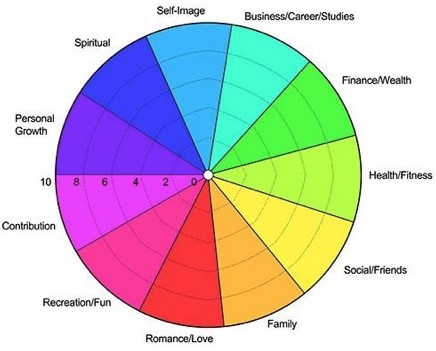
Other layouts can include columns, a box design, or just free writing! Remember, this is YOUR audit, so you can make it as simple or complex as you would like! Once you have your design, we want to begin by labeling the primary areas of your life. Below are a few example categories that you can use to get started:
Primary Categories
- Physical Health
- Emotional Health
- Spiritual Health
- Occupational Health
- Community/Social Health
- Financial Health
- Recreational Health
Once you’ve chosen your categories, now is the time for self reflection. Beginning one section at a time, what are your initial thoughts? What are doing well in that area, and what goals do you still have? Put any and everything down about that category you can think of. It can also be helpful to decide how to quantify your level of satisfaction. Some people use a numerical scale, or even an alpha grading system (A, A-, B, B+, etc). If you find yourself struggling with how to determine your satisfaction in these categories, consider asking yourself the following:
- How is my Physical Strength, mobility, and energy in life?
- Job Satisfaction – does it match your personal values, do you feel challenged?
- Career Progress – are you where you believed you would be in your career at this stage in life?
- Net Worth – do I spend or save in the way I should? Should I be planning for a major life event such as retirement or a child going to college?
- Financial Knowledge – Do I understand my financial needs, now and in the future?
- Do I have the relationships with my family that I want?
- Am I committing enough time to friendships, or building friendships that I need?
- Do I have a connection with my community? Do you have an interest in giving back?
- How is my love life? Do I have a relationship with my partner that is enjoy?
- Is my Self-Image healthy and realistic? Do I appreciate myself and have a motivating internal narrative with myself?
- Are you participating as often as you would like in your faith?
- Habits, Fun & Leisure – What is there to add, take away, or change?
- Personal Growth – As you walk through your life, what more do you still want to learn, do, or experience?
Ok, So How did I do?
This is designed to be a simple exercise, but there are a few things to keep in mind:
Be honest
This is the time to get real with yourself! Do not let yourself sugar coat or minimize your patterns, or real issues that need to be addressed. Same for allowing yourself to gloat when it is deserved. If you are especially accomplished in an area of your life compliment yourself on that!
Take your time
This is such a great opportunity to dive deep into your life, so take your time with this. After writing, set it down for a period, then come back to it later. You may find that you have new reflections to add in.
Be prepared
With this honesty can come heightened emotions. Let’s stay aware, that emotions cannot hurt you but they are purposeful in the way that motivate and provide feedback that change is necessary!
Completed! Now what?
Now you have the information about yourself. Some of it is filled with praise and accomplishments, but other parts are acknowledgements of needs to be addressed. This last step is going to help you to engage yourself intentionally for 2022
Action Statements
Let’s take ACTION! Taking you next moments to identify what you can do is your next step. However, there is a really important small step to take first. There are parts of our emotional unhappiness that we cannot change and you will have to be on the lookout for that. For example, a chronic health problem is most likely identified as a negative in a category. Since you are unable to change that, you will have to examine what elements of it you do have control over, such as an exercise regime or diet change which helps to alleviate some of your symptoms. Seeing elements of what we CAN do is an important process in this step. Once you understand this we can now formulate your action statements. Using concrete language which includes the what, where, when and who we write down specific steps to change. This helps you to form achievable and most importantly workable goals that actually give you specific steps to make lasting improvements on that category of your life.
Take the next step
Just get started! Choose the category that you feel most motivated to see a change in and begin with follow through with that action statement. You will notice an increase in overall happiness soon. To help yourself stay accountable, make a note on your calendar to check in on your progress quarterly throughout the year or speak with a therapist to see what is holding you back from attaining your goals. Those reviews are not meant to be opportunities to criticize what you haven’t done yet, but are chances to reinvigorate your intention for yourself for the year and to start again!
Learn More
Managing addiction issues in the holidays
Managing addiction issues in the holidays
The holidays are right around the corner. This is an exciting time of the year for many, but for those who struggle with substance use, the holidays can be challenging, stressful, and exhausting. The business of the holiday season, along with emotional stress that can come from family conflict, trauma, financial strain, or loneliness can lead those in recovery to resort back to poor coping strategies, making them more vulnerable to relapse.
For people struggling with addiction, the holidays are fraught with triggers and other aspects that can make maintaining sobriety difficult. Developing a strong sobriety plan to manage triggers goes a long way in helping a person be successful during this time. Isolation from family and others greatly contributes to people feeling depressed and looking for ways to cope. Finding support groups, such as AA, Celebrate Recovery, and Smart Recovery, to connect with during the holiday time can be a big support. Identifying warning signs of lapse, and making a plan for how to manage high risk situations ahead of time can also greatly increase a person’s chances for success.
We have put together some tips and strategies to help you safeguard your sobriety during the holidays:
Be Selective About the Invitations You Accept & Avoid Risky Situations
- Don’t feel obligated to accept every invitation you receive.
- Ask yourself: What is this event really about? Is this event appropriate for my stage of recovery? What are my motives for attending this event?
- Say yes to celebrating with people or in ways that are supportive of your recovery. This will give you peace of mind.
Limit Triggers
- Identify your triggers- Are they stress, specific environments, or certain people?
- Be aware of your own warning signs related to triggers, such as thinking patterns or unhealthy situations
- Take care of your basic needs (food, sleep, mood) to help you manage your triggers better
Have a Plan in Place
- Practice responses to triggering questions or stories from the past through role-play with a supportive friend or counselor
- Practice turning down substances or avoiding certain behaviors
- Consider bringing an accountability person to events with you
- It may be beneficial to arrive early and leave early to avoid potentially risky situations
- Bring your own safe food/beverages in order to have control over what you consume
- Have an escape plan. Make sure you would be able to leave at any time, if needed. Have your own transportation or means of escape.
Establish a Support System
- Reach out to sober friends or people who are understanding of your experience. Schedule an appointment with a therapist in advance to help make your holiday plan.
- Attend additional meetings with a counselor or support group during the holiday season.
Practice Mindfulness
- Be mindful about your attitudes and feelings about the holidays and adjust them when necessary. This may involve talking to a counselor or friend who understands addiction recovery. Be open, accepting, and positive at gatherings, instead of on-edge and defensive.
- Be mindful about what you’re consuming- keep a drink in hand that you have selected
Practice Self-Care
- Engage in stress-reducing activities during the holiday season. This may include, walking, hiking, biking, yoga, deep breathing exercises, meditation, or gentle exercise.
- Be sure to get enough rest and proper nutrition during the holidays
Try New Activities or Spend Time Serving Others
- This can help you avoid triggers and give you some good alternatives to former habits during the holidays.
- New activities may include cooking meals or baking with friends, watching holiday movies, experiencing nature, etc.
- Serve a meal at a homeless shelter or volunteer at non-profit organization.
Seek Additional Treatment if Needed
- There is no shame in going to rehab during the holidays if it protects you from harmful situations.
Remember that recovery is a one-day-at-a-time endeavor, regardless of the season you are in!
If you need additional help during the holidays, the Substance abuse and Mental Health Services Administration’s National Helpline is 1-800-662-HELP (4357).
Learn More