


Mood Tracking for Better Emotional Health
Mood Tracking for Better Emotional Health
Why Mood Tracking Matters
When working on understanding and gaining better control of your mental health, mood tracking is a fundamental technique often recommended by therapists. Even if you are not actively involved in therapy, mood tracking can still benefit you! If you are concerned you may have a mood disorder such as anxiety, depression, or Bipolar Disorders, mood tracking can help you to see patterns over time. This can bring you clarity, reduce self-blame, and support the progress you are attempting to achieve.
If you are struggling with mood swings, energy or appetite changes, or just feeling “off” and not sure why this topic is for you! This article is going to bring light to what mood tracking actually looks like. I will also go over the specifics of what you should be noting, and why it’s an approach that will help you.
What Mood Tracking Looks Like
Mood tracking is simply an observation of your emotions. You will notate what preceded those moods, and how they impacted your thoughts and actions. Think of it as traveling back in your memories and noting what you went through recently. The goal of mood tracking is to notice patterns over time in your emotional self.
There are numerous ways to monitor your moods. Some therapists have their own logs they will assign you. If you are not in counseling right now, there are also published journals or apps to download. Sometimes a simple spiral bound notebook is all that is needed to free-write what you are experiencing emotionally. There truly is no right way to go about it, what matters is that you spend time noticing your emotional self daily so you can learn more about yourself.
Mood tracking is most beneficial when you do it consistently. Set up a time of day that works best for you, and that might help you in some way. As an example, if you tend to struggle with anxiety or motivation in the early part of your day, a morning practice of mood tracking would be good for you.
What to Pay Attention To
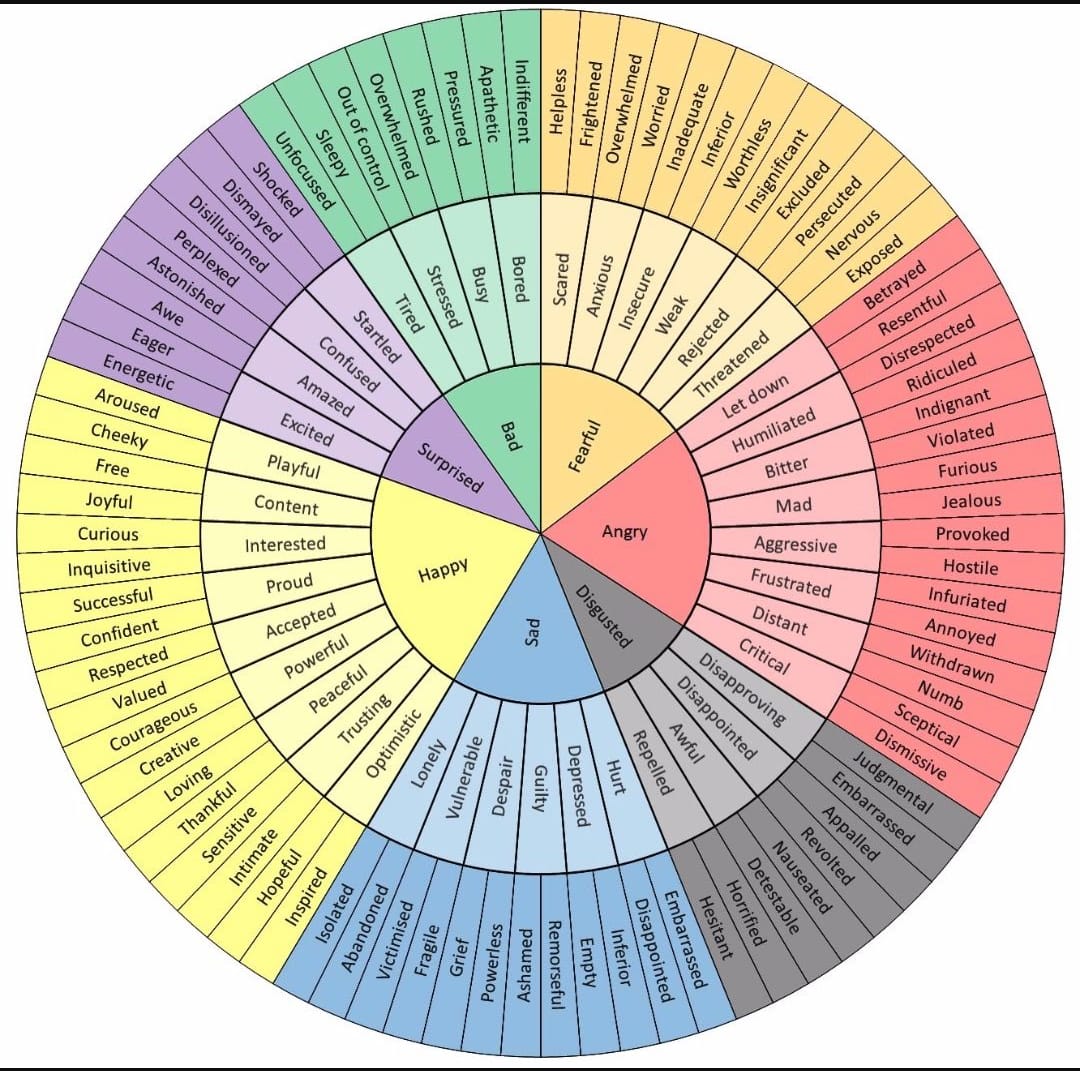
Paying attention to what moods you are experiencing is the first step to mood tracking. Depression, anxiety, stress, and anger are all feeling examples that could be monitored in your mood tracker. If you have a hard time identifying your emotions, the feelings wheel below can help you to find the words for what you are experiencing.
It’s useful to note how strong the feelings are, as well as the duration they last for. Notate what led up to those emotions, and if you attempted to cope with a negative emotion. Did that work well, or not really? Other things that you could log include your sleep, energy levels, stressors, and routines—keeping it simple so tracking feels supportive, not overwhelming.
Another interesting way to build insight is to not only do a daily mood log, but to also do a weekly reflection. This will give you even greater information into you and how you interact in the world.
I would suggest a daily and weekly reflection that takes no more than 10 minutes so as it is sustainable in your daily life. Remember, mental health practices in your life are meant to build you up, not take away from you.
How Mood Tracking Supports Mental Health & Therapy
When done consistently, mood tracking will build self-awareness.The practice of mood tracking will also help you to build the inner voice that helps you to recognize your needs in the moment. This will encourage better use of self care, coping skills, and boundaries. Even better, mood trackers provide excellent information for your therapist to help them provide you with individualized care. So whether you are seeking help for depression, or other mood disorders, mood tracking is a great step to take.
It’s important to note that mood tracking should not be used as a diagnostic tool. This is a method that should bring gentle awareness to your emotions. If you are concerned about a trend in your mood log, it would be best to review your mood log, in addition to your personal history with a clinical therapist before drawing any conclusions from your tracking.
When Tracking Signals It’s Time for Support
If you have been journaling, and mood tracking for some time you may notice a pattern by now. Are you seeing you have a persistently depressed mood? Is there a pattern of irritability and anger outbursts in your life? When mood tracking is raising more questions than answers, this is a sign that you could benefit from additional support. The work you have observing and tracking your moods up to this point will be a great jumping off point in therapy sessions.
Our therapists at Miracles Counseling Centers are all skilled at supporting your journey in reflection and ultimately building emotional balance in your life. Don’t let the work you have done up to this point slip away. Continue building upon this with one of our therapists, click the button below to begin scheduling!
Related Posts

What Makes Art Therapy Unique
What is Art Therapy Written by: Brandy Prabucki, LCMHC, ATR Art Therapy is...

What to know about Obsessive Compulsive Disorder now
Have you wondered what truly qualifies as having Obsessive Compulsive Disorder?...

When “I’m Fine” Is a Habit: How Emotional Suppression Impacts Mood Over Time
“I’m fine” is a phrase we all have used at least once or twice….maybe hundreds of...

What to know about EMDR Therapy
All you need to know about EMDR therapy EMDR…Have you heard that acronym yet?...